
We offer a variety of Fairtrade Certified decaffeinated coffees. Because we believe being fair with the people who make coffee possible at ground zero is the only way to do business. Fairtrade connects farmers, businesses, and consumers in sustainable and meaningful ways. Fairtrade principles are there to ensure fair prices, fair labor conditions, democratic and transparent organizations, community development, and environmental sustainability.

WATER ONLY PROCESSING
How great coffee becomes
great decaf, chemical-free.
Swiss Water® Process.
Learn How
Where to Buy

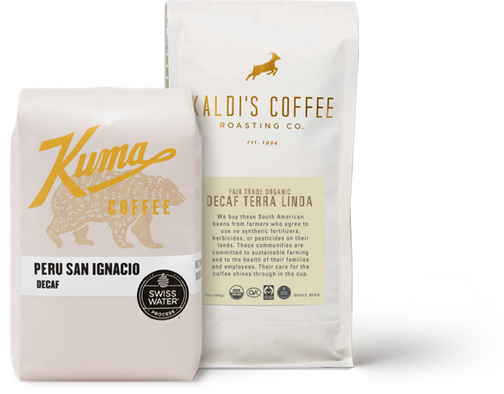
When you see the Swiss Water® name, it means your favorite roaster offers 100% chemical-free decaffeinated coffee.
Our Promise: No Added Chemicals, Ever.

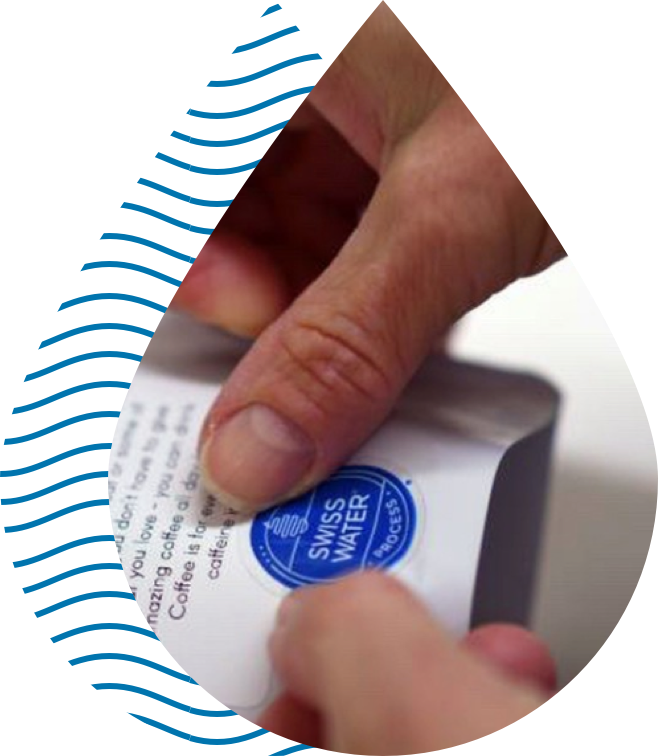

You can trust the Swiss Water® Process
We use only water, temperature, and time to gently remove caffeine, while preserving all the coffee’s original characteristics. Our seal means you’re getting the very best cup of decaf, free of chemicals or residual processing flavors.
Learn MoreAll decaffeination processes are not created equal.
The Swiss Water® Process is certified organic and
we have always been committed to processing
without added chemicals.

Methylene Chloride
A widely-used method of chemical solvent decaffeination uses Methylene Chloride, or dichloromethane, to remove caffeine particles from coffee. Unfortunately, it's not the safest substance, and has been banned in paint thinners and other industrial products for its toxicity. The use of Methylene Chloride as a decaffeination solvent is ages-old, but personally, we’d prefer to avoid even the smallest amount in what we consume.

Ethyl Acetate, Sugarcane, or 'Natural' Decaffeination
Another popular chemical solvent method is Ethyl Acetate, or acetylated ethyl alcohol. While it can be naturally derived, and is sometimes described as a natural process, at commercial scale, synthetic production is required. When used to decaffeinate, Ethyl Acetate changes the flavor of the coffee, adding a lingering fruity characteristic. We’d prefer our coffee to taste the way it was intended.

Carbon Dioxide
Carbon dioxide (or CO2) occurs naturally, but for commercial use is generally distilled from industrial byproduct. As a decaffeination medium, CO2 is used under pressure to improve its extractive properties. The CO2 process does not use chemical solvents.

Kosher Certified
Swiss Water® Process meets the strictest standards of kosher law – Kashrus. We are certified Kosher by Kosher Check. Kosher Check, formally known as BC Kosher, is recognized throughout the world by all rabbinical associations. Mazel tov!
Halal Certified
Halal certification is the process by which a company ensures that their food can be eaten by individuals who observe the laws and the teachings of Islam regarding the consumption of food and drink. Halal certification ensures that products are produced in facilities where they are safe from contamination of non-Halal substances. The certification indicates that the food products do not only fulfill Halal requirements, but are also in accordance with strict hygiene practices.

Organic Certification
Swiss Water is a certified organic processor by the Organic Crop Improvement Association, the world’s largest organic certification agency, under standards developed by the USDA National Organic Program. Our decaffeination facility conforms to the OCIA’s rigorous standards. The organic integrity of our operation ensures organic coffee beans maintain their organic certification through the decaffeination and onto the coffee roaster.
Rainforest Alliance Certified™
We want to contribute to a better world for people and nature. That is why we source a selection of our coffee responsibly by buying from Rainforest Alliance Certified farms. Being Rainforest Alliance Certified isn’t just about the trees. It’s about the people who live in the forest communities–and the farms they work on. The Rainforest Alliance seal means that farmers follow more sustainable farming practices that protect forests, improve their livelihoods, promote human rights of farm workers, and help them mitigate and adapt to the climate crisis. To learn more about the Rainforest Alliance, visit www.rainforest-alliance.org.

4C Certified
The Common Code for the Coffee Community (4C) is a global leading certification scheme for the sustainable cultivation and processing of green coffee. It aims to strengthen the production of environmentally friendly, socially fair, and economically viable coffee worldwide. Today 4C covers 15% of the global coffee area. The 4C certified coffee stems from 20 countries and is produced by over 300,000 farmers, the majority of them – smallholders. To learn more about 4C, please visit https://www.4c-services.org/
FSSC 22000
Foundation Food Safety System Certification 22000 (FSSC 22000) is the leading standard in ensuring food safety and consumer trust. FSSC 22000 specifically focuses on the food safety management systems within an organization—key to protecting the food supply chain. We hold full FSSC 22000 certification for our facilities.
U.S. Food & Drug Administration
We are registered with the Food and Drug Administration, the United States' governing body pertaining to food safety. We are happy to provide our registration number upon request.
Certifications
Our process ensures coffee certifications remain intact, including Organic*—a promise chemical solvent processes can't make. Learn more about our certifications below.
*OCIA certification is applicable only to non-roasted green coffee described on this site, unless otherwise specified.


